
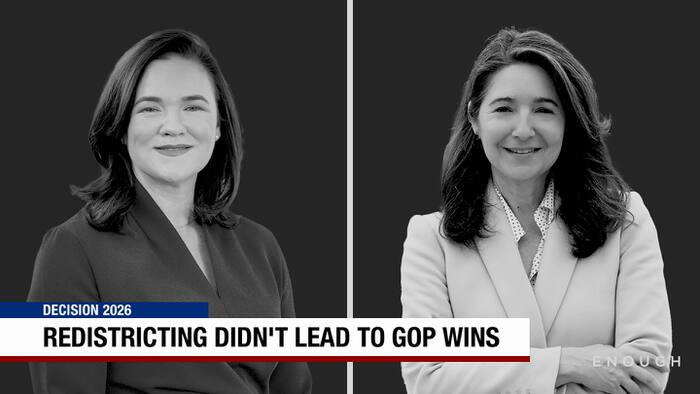
Texas Republicans redrew the state’s congressional map in 2025 with the goal of giving their party an advantage in Washington. But in Houston’s 9th Congressional District, the new boundaries didn’t deliver the outcome Republicans wanted.
Democrat Leticia Gutierrez defeated Republican Alex Mealer in Tuesday’s election, winning a district that was among five Texas Republicans targeted in their effort to gain more seats in Congress.
The result came after months of political fighting over the state’s congressional boundaries, including a Democratic walkout at the Texas Capitol aimed at blocking the new map.
In a statement following her victory, Gutierrez said, “They said our community’s voice could be drawn out of Congress. But nobody gets to draw away our dignity.”
How Texas Republicans changed the 9th Congressional District
The 9th Congressional District was previously represented by Democrat Al Green.
But under the new map, Green was drawn out of the district, leaving the seat open and setting up a congressional race between Gutierrez and Mealer.
The newly drawn district also includes Houston’s Magnolia Park neighborhood, where an ICE agent was accused of fatally shooting Lorenzo Salgado Araujo in July.
The changes were part of a larger Republican redistricting effort initiated at the request of President Donald Trump.
Republicans sought to redraw five congressional districts to improve their party’s chances of winning additional seats in the U.S. House.
“I think we get five. And there could be some other states,” Trump said during the redistricting push.
Texas Democrats tried to block the new congressional map
The redistricting plan sparked a political showdown in Austin.
Democratic lawmakers left Texas in an effort to prevent Republicans from moving forward with the new congressional map.
By leaving the state, Democrats denied the Texas House a quorum, the minimum number of lawmakers required to conduct legislative business.
“The roll has been called and a quorum has not been established,” House Speaker Dustin Burrows announced during the standoff.
The walkout temporarily prevented lawmakers from advancing the plan.
But Democrats eventually returned to the Capitol.
Many voted against the new congressional boundaries, but Republicans held the majority in the Legislature and had enough votes to pass the map.
The debate also exposed tensions between lawmakers over the walkout.
“You own the walkout. You said you did that, but don’t come into this body and say we didn’t include you. You left us for 18 days,” one lawmaker said during the debate.
Republican lawmakers acknowledged there were no guarantees
Even as Republicans pushed to redraw the state’s congressional districts, some lawmakers acknowledged the new boundaries wouldn’t guarantee election victories.
“I believe [we] should elect more Republicans to the U.S. Congress, but I’m here to tell you there are no guarantees,” Republican state Sen. Phil King of Arlington said during the redistricting debate.
That warning proved relevant in Houston’s 9th Congressional District.
Despite the effort to make the district more favorable to Republicans, voters elected Gutierrez, keeping the seat in Democratic hands.
The outcome highlights the limits of redistricting as a political strategy: Lawmakers can change congressional boundaries, but voters still determine who represents them in Washington.


